

Moustafa El-Kilani
An artist needs no one's permission to imagine. Yet this elementary right sparks controversy whenever an artist decides to depart from the image audiences are used to, or treads into territory perceived by some as taboo in the name of public taste, or placed by others under the authority of a single religious interpretation.

During Mona Zaki's panel discussion at the El Gouna Film Festival, fear was not an abstract notion she discussed from a distance. It inhabited the tone of her voice, quavering at times as she recalled what she had weathered, to the point where one felt she was fighting back real tears. She admitted that fear resides within her, and that had she not wrestled with it, she would never have produced anything. She did not pretend to appear stronger than she was; she allowed us to see how fragile a true artist can be while choosing to carry on.

When speaking about acting, it was clear that what propels her forward is that world artists fashion through their imagination and enter with full emotional commitment. In that space, a role is not simply lines spoken before a camera, but another life one strives to uncover and believe in. Hence her remarks on fear seemed intimately bound to her views on art: an artist does not shed fear in order to experiment, but must ensure fear does not make choices on their behalf. What hurts most in the backlash against a project such as the film *El Sett* (The Lady) is that, after giving everything to step into a new realm, the artist finds herself forced to defend her sheer right to dream of it in the first place.

It is the very fear that grips us writers too: when we disguise words with symbols on Facebook so algorithms don't catch them and ban us for months, simply because we attempted to speak candidly, to express our thoughts on our surroundings, on things that directly affect our lives and our future... when we review our articles multiple times lest a certain friend or a certain country take offense... fear grips us too.
Creativity does not operate that way. It does not originate from a checklist of permitted and forbidden matters, nor does it advance if the creator constantly seeks society's permission before every choice. The task of imagination is to venture into unfamiliar places, to probe images, ideas, and characters that may unsettle us or challenge what we know. Converting unease into moral guardianship, and difference into condemnation, is no defense of public taste; it is an effort to shrink art.
What happened to Mona Zaki following the announcement of *El Sett* underscores one dimension of this crisis. Before many had even seen the film, judgments were pronounced on her casting as Umm Kulthum, on her look in character, and on her physical resemblance to the diva. Any viewer is entitled to debate these choices after viewing the work, but judging an artistic venture before it is finished reveals a readiness to call the artist to account for merely daring to try.
This is not about defending the film or Mona Zaki's performance. The work may succeed or stumble; there may be legitimate criticisms regarding the makeup, acting, or directorial vision. All of these belong strictly to film criticism, and should never be conflated with the actress's right to undertake the experiment. Criticism examines what the film achieved, whereas moral guardianship attempts to prevent the artist from approaching the idea altogether.
Artists, by nature, need experimentation. An actor cannot keep repeating the exact same persona in every production, nor evaluate each new venture by the benchmarks of previous successes. Doing so would arrest development, turning past successes into a cage audiences insist they never leave. An experiment may hit or miss, but without it there is no possibility of discovering a different performance, a novel character, or a horizon the artist had never reached before.
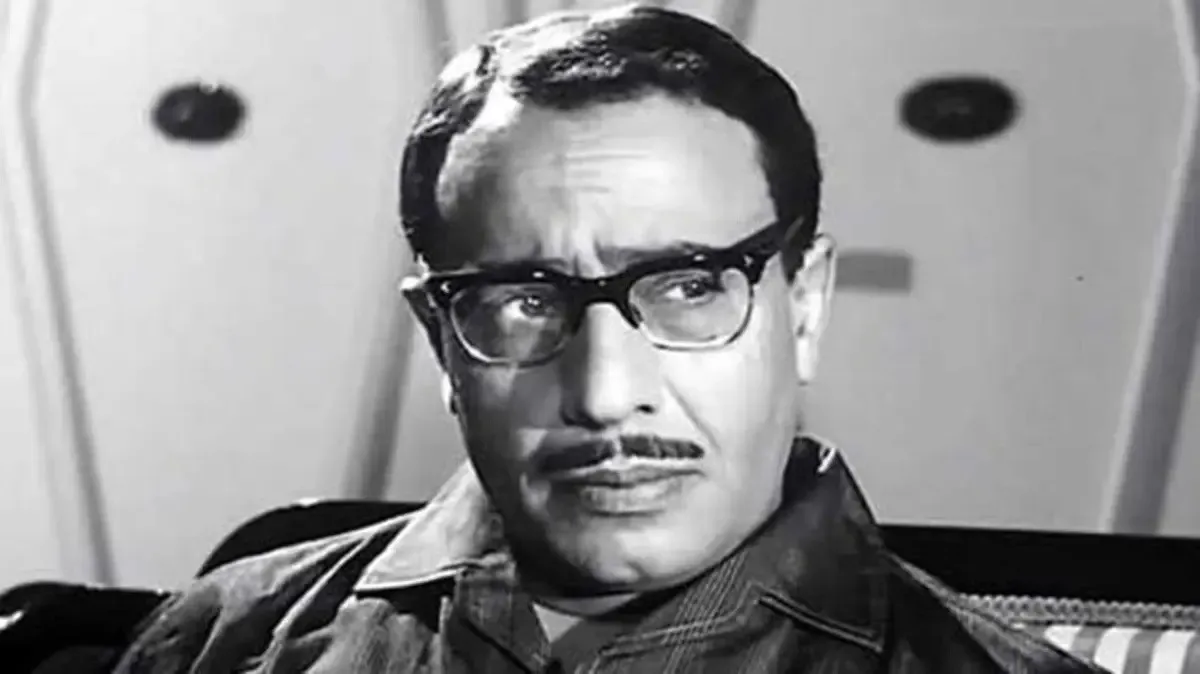
Nour El-Sherif grasped this reality early on. He made several statements defending imagination and an artist's right to experiment... he never sought the safe or guaranteed role, but rather characters that confronted him with a fresh challenge.

This is not an appeal to exempt art from criticism, nor to dismiss audience sensitivities. Rather, it is a reminder that the existence of traditions or so-called "public taste" does not grant a mandate to censor the imagination, and respecting public decency does not mean reducing art only to whatever upsets no one. What remains for an artist if they are forced to choose exclusively what satisfies the most conservative segment of society?
And what meaning does renewal retain if all that is requested is altering outward forms without ever nearing an unsettling thought?
Reactionary forces do not always need official bans. Often, it suffices to turn every attempt at change into a "moral dispute," whereupon social media outrage flares up and the artist is accused of crossing boundaries. In this way, fear weaves itself into artistic choices: Will the public take offense? Will the project be decried as hostile to religion or taste? Would it be safer to discard the premise altogether?
When this fear prevails, the artist is not the sole loser. The entire industry loses, for creators retreat toward safe ground, recycling what has already been delivered, leaving original ideas trapped in hesitation. A masterpiece will not emerge every time, but nothing novel can ever be born if artists are forbidden to take risks.
Mona Zaki, like any actress, has the right to take on a demanding role and fail at it. Audiences are equally entitled to reject the film or criticize it after viewing. Yet no one has the right to turn personal expectations into the standard for what an artist is permitted to create.
An artist is driven by imagination, and imagination cannot progress within boundaries charted by fear. It requires space to experiment, take risks, and test boundaries, even when every attempt does not hit the mark. That is what every genuine artist believes in their artistic choices, and that is what we must defend today: that artists remain free to explore, and that criticism remains capable of assessing the outcome without turning into an authority that strangles the endeavor before it begins.
If we want an evolving art, we must accept that experimentation can falter. But if we demand that artists guarantee universal satisfaction before they even start, we will receive nothing but an endless recycling of roles, personas, and themes, and a creative imagination that has learned how to cower.
Comments
Sign in to like or save this article
Sign in to join the conversationNo comments yet. Be the first to share your thoughts.